
What is UGC? Meaning, examples and how brands use it.
What is UGC, what do brands use it for and which rules apply in Switzerland and Germany? After this guide you know the formats, the evidence and the rules on rights, labelling and AI. And you know how to get started, as a brand or as a creator.
- Author
 LaraSocial media management and strategy, community online and offline
- Published
- Updated
- Reading time
- 13 minutes

In short
- UGC stands for user generated content: reviews, photos and videos from customers, and today often also videos that creators film for a brand in the style of real customers.
- Organic UGC comes without a brief, paid UGC can be planned and tested as an ad, and you only use either with permission from the person who made it.
- The effect of reviews is well documented: at a retailer of high-priced gifts, purchase likelihood was 270% higher with five reviews than with none, according to an analysis by Northwestern University [5].
- Switzerland and Germany regulate rights and labelling differently, and in the EU, AI-generated people that falsely appear real must be disclosed since 2 August 2026 [25].
Maybe you came across the term in a proposal, in a job ad or under a TikTok video. UGC is no longer just the photo a customer posts of their own accord. Today many people mean videos that creators film on behalf of a brand so that they feel like real experiences.
This overview covers both sides: what UGC is, what the evidence shows, which formats exist, how to get started and what applies in Switzerland and Germany on rights, labelling and AI. Briefing, finding creators, strategy and community each have their own guide, which we link where it fits.
01What is UGC? The meaning of user generated content
- Stands for
- user generated content
- In German
- nutzergenerierte Inhalte
- Examples
- review, photo, video, comment
UGC stands for user generated content. It means reviews, photos, videos and posts that people publish about a product or a brand. The sender is a person, not the company. That is exactly what makes UGC credible: it shows what a product looks like in everyday life.
In marketing, the term has two meanings today. The first is classic UGC: a customer writes a review or shows her new jacket in a story without anyone asking her to. The second is UGC as an ad format: a brand pays a creator to film a video in the style of a real customer. These videos mainly run as ads on Instagram and TikTok, on product pages and in emails. When people talk about “UGC content” or “UGC videos” today, they usually mean this second form.
Both forms aim to show rather than claim. But they differ in who is in control, who gets paid and which rules apply. That is why we separate them in the next section.
02Organic and paid UGC: the difference
- Organic
- from customers, unprompted
- Paid
- from creators, on commission
- Hybrid
- ads through the creator’s account
| Feature | Organic UGC | Paid UGC |
|---|---|---|
| Who makes it | customers | creators on commission |
| Payment | none | fee, product or both |
| Control | barely, you take what comes | brief, scenes, variants |
| Where it runs | first on the person’s profile | in your ads, your store, your channels |
| Permission | needed for every reuse | set out in the contract |
| Strength | nobody was paid | can be planned and tested |
Organic UGC carries particular credibility because nobody was paid for it. But you cannot order it, only encourage it: with a product people like to show, with a question after the purchase or with your own hashtag. Paid UGC is the counterpart. You decide what goes into the frame and get several openings to test. In return it has to stay honest: the creator shows the product the way they actually experienced it.
In between there is a hybrid. On Meta, partnership ads run from the account of a creator or other partner [1]. On TikTok, Spark Ads let you run organic posts by other creators as ads once they authorise it. Likes, comments and new followers from the ad then go to the original post [2].
03UGC or influencer marketing: where the line is
- UGC creator
- delivers a video for you
- Influencer
- brings their reach
- Content creator
- umbrella term for both
Many brands face the question “UGC or influencer”. The short answer: with an influencer you buy reach, with a UGC creator you buy a video.
| Term | What you get | What matters |
|---|---|---|
| UGC creator | a video for your channels and ads | opening, sound, rights |
| Influencer | a post on their own channel | reach, fit, labelling |
| Content creator | umbrella term for people who make content | depends on the brief |
| EGC | content from your employees | voluntary, with consent |
| Brand content | content you produce yourselves | your brand as the sender |
Many creators do both, so the brief decides, not the title in their bio. If a video runs on the creator’s channel, it is influencer marketing with all the labelling rules. If you only use it on your own channels, the video matters more than the follower count.
Reach alone does not build trust. In a Bitkom survey in Germany from autumn 2025, 21% of people who shop through social networks found influencer advertising likeable. Only 10% trusted content creators more than classic product tests [3]. Retailers in Germany are split too: 44% of the retailers surveyed think influencers can increase trust in products, 46% say they can damage the company’s image [4].
04Why brands use UGC: what the evidence shows and what it does not
- Strong evidence
- reviews affect purchases
- Weak evidence
- paid creator videos
- Data
- study from 2017, Germany 2020
Many articles on UGC quote big percentages without a source. We only used studies we could open ourselves. The evidence is solid for reviews, the classic form of UGC.
- In 2017 the Spiegel Research Center at Northwestern University in the US analysed three online retailers using data from the review provider PowerReviews. At the high-end gift retailer, purchase likelihood for a product with five reviews was 270% higher than for one without reviews. For lower-priced products, conversion rose 190% once reviews were shown, for higher-priced products 380% [5].
- A perfect score helps less than a very good one. Purchase likelihood typically peaked at average ratings between 4.0 and 4.7 stars and fell as ratings approached 5.0 [5].
- In Germany in 2020, 55% of online shoppers used customer reviews to inform themselves before buying, more than any other source. Social networks were named by 16% [6].
For paid creator videos we found no neutral study with open data. The platforms still recommend them: TikTok advises small businesses to use videos in which customers or creators share their experience, and to show such videos on product pages too [7]. Whether they beat your current ads is something only a test with the same budget can tell. How to set one up is covered in our guide on testing several ad variations.
05UGC examples: formats and platforms
- Format
- vertical 9:16
- Switzerland
- Instagram 3.8 million weekly
- Used in
- ads, store, social, emails
| Form | Example | Where it works well |
|---|---|---|
| Review with photo | stars, one sentence, a phone photo | product page, Google |
| Unboxing | opening the parcel at the kitchen table | Reels, TikTok, ads |
| Testimonial | “I’ve been using it for three weeks …” | ads, product page |
| How-to | how to apply it or set it up | store, stories, emails |
| Before and after | the wardrobe before and after tidying | ads, only with proof |
| Faceless | hands and a voice-over | everywhere |
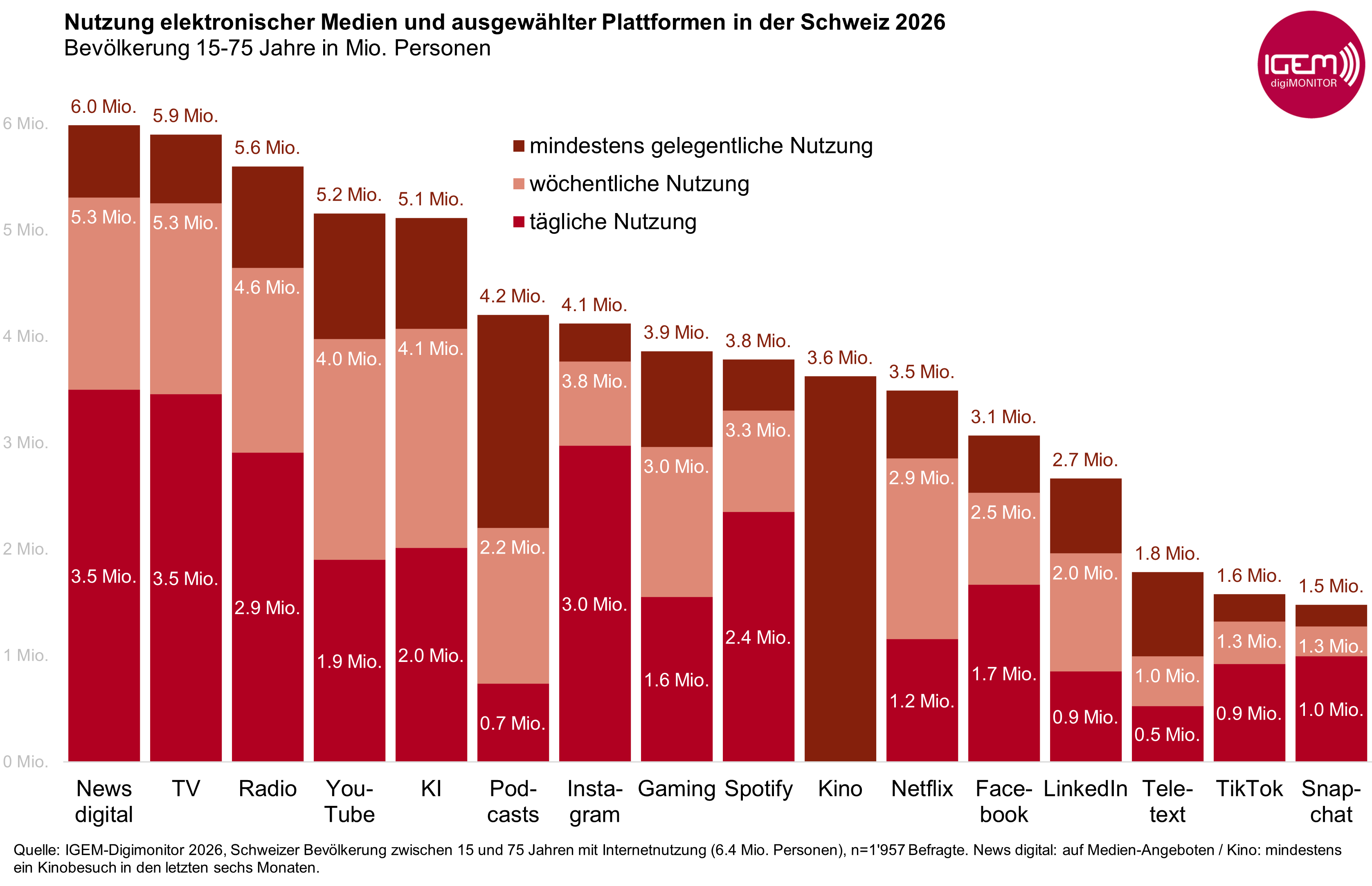
For Switzerland, the IGEM-Digimonitor 2026 shows how many people use each platform. Of the 6.4 million internet users aged 15 to 75, 4.0 million use YouTube and 3.8 million use Instagram at least weekly, TikTok 1.3 million. Daily use of Instagram stands at 3.0 million [8]. In Germany, according to Bitkom, 15% of internet users shop via Instagram, 14% via Facebook, 11% via YouTube and 8% via TikTok [3].
Film vertically in 9:16. TikTok recommends exporting at 1080 × 1920 pixels or higher and hooking viewers in the first three seconds [7]. Examples of strong openings are collected in our guide on the first seconds of a video ad.
06How to start with UGC: strategy, brief, creators, community
- First
- goal and placement
- Then
- brief and paid test
- With us
- Lara finds the creators
Goal and channel. First decide what you need UGC for: reaching new people through ads, removing doubts on the product page or filling your channels. The goal determines format, length and rights. How goal, channels and rhythm fit together is shown in our guide on planning your channels in six steps.
Brief. A creator needs a written one-page brief: goal, key message, hook ideas, scenes, technical specs, delivery and rights. A template with twelve fields is in our guide with the one-page brief for creator videos.
Finding creators. Look among your own customers, on TikTok and Instagram or on platforms, and test every person with a paid trial job. What belongs in the contract and when an agency makes sense is covered in our guide on searching for, vetting and hiring creators. Costs depend on the number of videos, variants, usage period and editing.
Community. Organic UGC grows where people like talking about you. Reply to posts, ask for photos and say thank you in public. How to handle comments, rules and meetups is explained in our guide on comments, messages and events with your customers.
From our work. With us, Lara finds the creators who fit your brand and reaches out to them. For this we draw on our own creators and a small network. For some of the barefoot shoe brand Kjavik’s ads, Manu himself stood in front of the camera as a UGC creator. More under UGC and Content Creation.
07Rights to UGC: Switzerland and Germany separately
- Switzerland
- Art. 2, 10 and 16 URG, Art. 28 ZGB
- Germany
- Sections 15, 31 and 72 UrhG, Section 22 KUG
- Rule
- ask first, then use
A photo a customer posts belongs to her. Being tagged is not permission to use it in your ads or your store. TikTok also requires users to post only content they created or have the right to share [9]. With paid UGC, you only get the uses you agree on.
| Question | Switzerland | Germany |
|---|---|---|
| Reusing a customer photo | Under the Swiss Copyright Act, even simple photos of objects count as works. The author decides whether, when and how they are used [10]. | Under the German Copyright Act, even simple photos are protected [11]. Making them available online is the author’s right [12]. |
| Scope for creator videos | Other partial rights only pass if agreed [10]. | If uses are not listed expressly, the purpose of the contract decides [13]. |
| Face, name, voice | Only with justification such as consent, under the Swiss Civil Code [14]; in advertising, the Swiss Fair Advertising Commission requires express consent [15]. | Images of people only with consent, which is deemed given if the person was paid [16]. |
So with organic UGC, ask in writing, for example by direct message, and say where and for how long you will show the image. With paid UGC, channels, duration, territory and editing belong in the contract. This is not legal advice; if in doubt, have contracts checked by a professional.
08Labelling and genuine reviews: Switzerland and Germany
- Switzerland
- Art. 3 UWG, SLK principles B.7 and B.15
- Germany
- Sections 5a and 5b UWG, Section 6 DDG
- Rule of thumb
- anything in return means label it
| Question | Switzerland | Germany |
|---|---|---|
| When to label? | Commercial communication must be clearly recognisable, also on social media accounts, otherwise the relationship with the brand must be disclosed [15]. | Under the German Unfair Competition Act, failing to disclose the commercial purpose is unfair unless it is obvious from the circumstances, and payment is presumed [17]. Advertising must be clearly recognisable [18]. |
| How to label? | Principle B.15 prescribes no fixed word, but the advertising must be clearly recognisable [15]. | If the product is the focus, the state media authorities recommend “Werbung” (advertising) throughout the video; “ad” or “sponsored by” is not enough [19]. |
| Reviews | Under the Swiss Unfair Competition Act, misleading claims about goods are unfair [20], and so are fake accounts that disguise advertising [15]. | Anyone showing reviews must say whether and how they check that they come from customers who actually bought or used the product [21]. Commissioning fake reviews is always prohibited towards consumers [22]. |
On your own brand channel in Germany, a video needs no separate label according to the state media authorities, as long as the channel is clearly recognisable as a company channel. If the creator posts the video on their profile, they have to label it. A free product can count as payment too [19]. In Switzerland, the Fair Advertising Commission also requires testimonials to stick to the product and to be verifiable as to content and author [15]. Its principles are rules set by the communications industry, not law. If in doubt, have a professional check what applies to your case.
09Becoming a UGC creator: what it involves
- Followers
- not required
- Switzerland
- clarify AHV status
- Germany
- registration under Section 138 AO
Many people searching for UGC want to become creators themselves. So here is an honest answer from the side of the brands that hire creators. A UGC creator is a service provider: you film videos to a brief, deliver on time and give the brand the agreed rights. You do not need a large following, and not always a face on camera either. Hands, voice and good close-ups are enough for many products.
What brands want to see: a few vertical sample videos with a strong opening, clean sound and natural language. Film them with products you bought yourself. State in every quote which uses the price covers, and label advertising on your own profile.
Then there is registration. In Switzerland, the compensation office decides case by case whether you count as self-employed for Swiss old-age and survivors’ insurance (AHV). Working for several clients is usually treated as self-employment. Self-employed people are not insured against unemployment and not compulsorily insured against accidents [23]. In Germany, you register a commercial business with the municipality and a freelance activity with the tax office [24]. Check what applies to you with an accountant or tax adviser.
We give no figure on earnings because we found no reliable public survey on it. Read courses that promise fixed incomes critically. We ourselves work with a small network of creators and freelancers. If you are freelance and good at content, you can send us two pieces of your work via our team page.
10AI and UGC: avatars, labelling and trust
- EU
- Art. 50 AI Act since 2 August 2026
- Switzerland
- no AI law, consultation planned 2027
- Platforms
- labels for realistic AI content
AI can generate videos in which an avatar talks about a product like a real customer. Since 2 August 2026, Article 50 of the AI Act has applied in the EU. A deepfake is AI-generated or manipulated image, audio or video content that resembles real or plausibly real people and would falsely appear authentic. It must be disclosed at the latest on first exposure. An advertising company remains the deployer even if freelancers operate the tool on its behalf [25]. TikTok requires a label for AI content showing realistic-looking scenes or people [9], and Meta shows an “AI info” label on detected or disclosed AI content [26].
Switzerland has no dedicated AI law yet [27]. According to the Federal Council, the consultation on a draft is scheduled to open in spring 2027, as of 28 October 2026 [28]. The Swiss Fair Advertising Commission does require verifiable testimonials and no references to fictitious people [15]. In our reading, an AI avatar posing as a happy customer does not fit with that. In Germany, commissioning fake consumer reviews or recommendations, or misrepresenting consumer recommendations on social media to promote sales, is always prohibited towards consumers [22]. In our reading, such an avatar can fall under this too. Both are readings, not legal advice. Have such cases checked by a professional before you use them. For scenes, product worlds and variants, on the other hand, AI helps. More in our guide on AI in video ads.
Honest limits. The effect of reviews is well documented, for paid creator videos there are hardly any neutral figures, and we found no comparable Swiss survey. Organic UGC and first briefs are something you can handle yourselves. For contracts, health claims and AI avatars, bring in a professional.
Frequently asked questions
What is a UGC creator?
A UGC creator films photos or videos for a brand that feel like real customer experiences. The brand uses them on its own channels, in its store or as ads. Unlike with influencers, reach is not what counts but the video itself: the opening, the sound, how natural it feels and the agreed usage rights.
Is UGC still worth it?
For many brands, yes, especially if you run ads and constantly need new videos. The effect of reviews is well documented, for paid creator videos there are hardly any neutral figures. So test UGC against your current ads with the same budget and audience, and decide by purchases, not by likes.
Can I just share photos from customers?
No, not without permission. The photo belongs to the person who took it, and a tag is not consent. Ask in writing, for example by direct message, and say where and for how long you want to show the image. Get the use for ads and your store confirmed expressly, in Switzerland as in Germany.
Can you become a UGC creator without followers or without showing your face?
Yes. With UGC, brands buy a video, not reach, so the follower count is secondary. Many products can be shown with hands, close-ups and a voice-over. Even then the brand needs your consent to use your voice and hands in advertising, and you need good sample videos.
What is the difference between UGC, EGC and IGC?
UGC comes from customers or from creators who appear as customers. EGC means employee generated content and comes from your staff. IGC stands for influencer generated content, meaning posts by influencers on their own channels. You clarify rights and labelling for all three, depending on who gets paid.
Are AI-generated UGC videos allowed?
AI in videos is allowed, deception is not. If an AI avatar falsely looks real, the video counts as a deepfake in the EU and must be disclosed at the latest on first exposure. In our reading, an AI avatar posing as a happy customer is also a problem under Swiss and German fair advertising rules. Have such cases checked by a professional.
Sources
- Meta for Developers (n.d.): Partnership Ads API. https://developers.facebook.com/documentation/ads-commerce/marketing-api/ad-creative/partnership-ads, retrieved 14 November 2026
- TikTok (2026): About Spark Ads (TikTok Ads Manager help, June 2026). https://ads.tiktok.com/help/article/spark-ads, retrieved 14 November 2026
- Bitkom (German digital association) (2026): Press release of 8 January 2026: 3 in 10 shop via social networks (survey of 1,120 internet users in Germany, weeks 40 to 41 of 2025; the page text gives the date as “08. Januar 2025”, German). https://www.bitkom.org/Presse/Presseinformation/3-von-10-kaufen-ueber-soziale-Netzwerke, retrieved 14 November 2026
- Bitkom (German digital association) (2025): Press release of 8 July 2025: Social commerce, 6 in 10 retailers advertise on social networks (German). https://www.bitkom.org/Presse/Presseinformation/Social-Commerce-Haendler-soziale-Netzwerke, retrieved 14 November 2026
- Medill Spiegel Research Center, Northwestern University (2017): How Online Reviews Influence Sales (report, June 2017, PDF). https://spiegel.medill.northwestern.edu/wp-content/uploads/sites/2/2021/04/Spiegel_Online-Review_eBook_Jun2017_FINAL.pdf, retrieved 14 November 2026
- Bitkom (German digital association) (2020): Press release of 27 November 2020: Online reviews are the most important source of information (German). https://www.bitkom.org/Presse/Presseinformation/Online-Bewertungen-sind-wichtigste-Informationsquelle, retrieved 14 November 2026
- TikTok for Business (n.d.): Video Advertising Guide for Small Businesses. https://ads.tiktok.com/business/en/guides/video-advertising-guide, retrieved 14 November 2026
- IGEM and WEMF AG für Werbemedienforschung (2026): IGEM-Digimonitor 2026: use of electronic media and selected platforms in Switzerland 2026 (chart, German). https://wemf.ch/media/mediennutzung_digimonitor_2026_d.png, retrieved 14 November 2026
- TikTok (2026): Community Guidelines: Integrity and Authenticity (released 25 August 2026, effective 24 September 2026). https://www.tiktok.com/community-guidelines/en/integrity-authenticity, retrieved 14 November 2026
- Swiss Federal Chancellery (Fedlex) (2025): Copyright Act (URG), SR 231.1, version of 1 July 2025, Art. 2, 10 and 16 (German). https://fedlex.data.admin.ch/filestore/fedlex.data.admin.ch/eli/cc/1993/1798_1798_1798/20250701/de/html/fedlex-data-admin-ch-eli-cc-1993-1798_1798_1798-20250701-de-html-7.html, retrieved 14 November 2026
- German Federal Ministry of Justice (1965): Section 72 UrhG (German Copyright Act), photographs (German). https://www.gesetze-im-internet.de/urhg/__72.html, retrieved 14 November 2026
- German Federal Ministry of Justice (1965): Section 15 UrhG (German Copyright Act), exploitation rights (German). https://www.gesetze-im-internet.de/urhg/__15.html, retrieved 14 November 2026
- German Federal Ministry of Justice (1965): Section 31 UrhG (German Copyright Act), granting rights of use (German). https://www.gesetze-im-internet.de/urhg/__31.html, retrieved 14 November 2026
- Swiss Federal Chancellery (Fedlex) (2026): Swiss Civil Code (ZGB), SR 210, version of 1 July 2026, Art. 28 (German). https://fedlex.data.admin.ch/filestore/fedlex.data.admin.ch/eli/cc/24/233_245_233/20260701/de/html/fedlex-data-admin-ch-eli-cc-24-233_245_233-20260701-de-html-2.html, retrieved 14 November 2026
- Swiss Fair Advertising Commission (Schweizerische Lauterkeitskommission) (2025): Grundsätze Lauterkeit in der kommerziellen Kommunikation (principles on fairness in commercial communication), January 2025, principles B.7 and B.15 (PDF, German). https://www.faire-werbung.ch/wp-content/uploads/2025/01/SLK-Grundsaetze_DE-1.1.2025.pdf, retrieved 14 November 2026
- German Federal Ministry of Justice (1907): Section 22 KunstUrhG (German Art Copyright Act), right to one’s own image (German). https://www.gesetze-im-internet.de/kunsturhg/__22.html, retrieved 14 November 2026
- German Federal Ministry of Justice (2004): Section 5a UWG (German Unfair Competition Act), misleading by omission (German). https://www.gesetze-im-internet.de/uwg_2004/__5a.html, retrieved 14 November 2026
- German Federal Ministry of Justice (2024): Section 6 DDG (German Digital Services Act), duties for commercial communications (German). https://www.gesetze-im-internet.de/ddg/__6.html, retrieved 14 November 2026
- die medienanstalten (German state media authorities) (2025): Leitfaden der Medienanstalten: Werbekennzeichnung bei Online-Medien (guide to labelling advertising in online media), May 2025 (PDF, German). https://www.die-medienanstalten.de/fileadmin/user_upload/die_medienanstalten/Service/Merkblaetter_Leitfaeden/Leitfaden_Werbekennzeichnung_Onlinemedien_ua.pdf, retrieved 14 November 2026
- Swiss Federal Chancellery (Fedlex) (2025): Federal Act against Unfair Competition (UWG), SR 241, version of 1 January 2025, Art. 3 (German). https://fedlex.data.admin.ch/filestore/fedlex.data.admin.ch/eli/cc/1988/223_223_223/20250101/de/html/fedlex-data-admin-ch-eli-cc-1988-223_223_223-20250101-de-html-5.html, retrieved 14 November 2026
- German Federal Ministry of Justice (2004): Section 5b UWG (German Unfair Competition Act), material information (German). https://www.gesetze-im-internet.de/uwg_2004/__5b.html, retrieved 14 November 2026
- German Federal Ministry of Justice (2004): Annex to Section 3(3) UWG (German Unfair Competition Act), no. 23c, fake consumer reviews (German). https://www.gesetze-im-internet.de/uwg_2004/anhang.html, retrieved 14 November 2026
- AHV/IV information office (2026): Leaflet 2.02: contributions of the self-employed to AHV, IV and EO, as of 1 January 2026 (PDF, German). https://www.ahv-iv.ch/p/2.02.d, retrieved 14 November 2026
- German Federal Ministry of Justice (1976): Section 138 AO (German Fiscal Code), notification of business activity (German). https://www.gesetze-im-internet.de/ao_1977/__138.html, retrieved 14 November 2026
- European Commission (2026): Transparency obligations under Article 50 AI Act (FAQ), last update 24 July 2026. https://digital-strategy.ec.europa.eu/en/faqs/transparency-obligations-under-article-50-ai-act, retrieved 14 November 2026
- Meta (2024): Our Approach to Labeling AI-Generated Content and Manipulated Media (5 April 2024, updated 12 September 2024). https://about.fb.com/news/2024/04/metas-approach-to-labeling-ai-generated-content-and-manipulated-media/, retrieved 14 November 2026
- Swiss Federal Office of Justice (2025): Künstliche Intelligenz (regulating AI in Switzerland, page of 12 February 2025, German). https://www.bj.admin.ch/de/kuenstliche-intelligenz, retrieved 14 November 2026
- Swiss Federal Office of Communications (OFCOM) (2026): Federal Council takes note of interim progress on AI regulation (press release, 28.10.2026). https://www.bakom.admin.ch/en/newnsb/s2TQiUUjrA5D, retrieved 14 November 2026
This guide is by nalu studios. We offer the service it covers ourselves. AI helps us work, a human has the final say. How we work: About us and our values.